GloveBox-Transfer Unit (GBT)

Inert sample transfer from Glove Box to Experiment

The Challenge

Ex-situ experiments of cell components or cycled battery materials are of high interest, but such materials are highly sensitive to exposure to ambient air as highly reactive species are usually present.

Currently, such materials are often put in coin cell cases with glued kapton or other windows to avoid air exposure.

This results in several drawbacks:
  • tidious sample preparation
  • Probeable surface area is limited (to window area)
  • Light elements cannot be detected (Z < Phosphorous)
  • Quantitative experiments more complicated
  • Depth resolved studies not possible

Our Solution

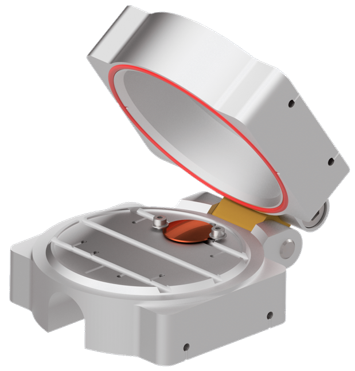
GloveBox-Transfer Unit (GBT)

Sample holder with sealing to protect sensitive samples from air exposure.

  • Sample mount in Ar glove box
  • Sealing
  • Inert transfer to experiment
Exemplary image of GBT unit

Sealing Performance

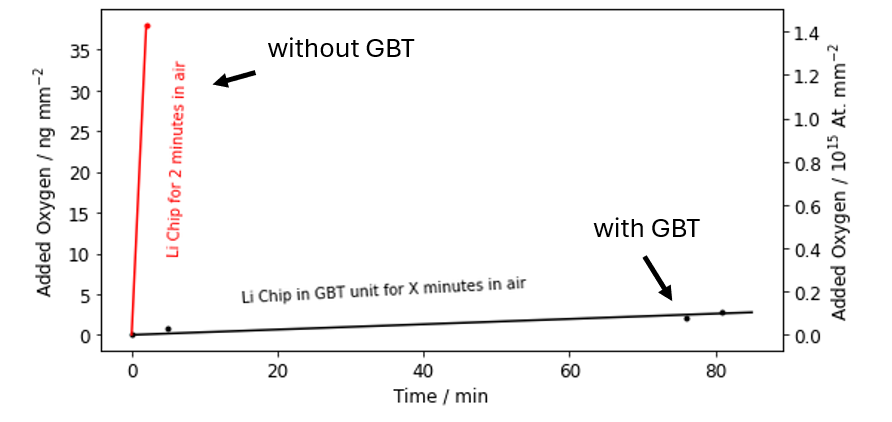
Demonstration of sealing performance versus time using a standard Li chip and monitoring of the added oxide (with GBT vs. without GBT).

Demonstration of sealing performance versus time using a standard Li chip and monitoring of the added oxide (with GBT vs. without GBT).

Working Principle

I Sample loading in Glove box
II Close + evacuate in glove box load lock
III Simple + reproduceable transfer procedure
IV Evacuate experiment + open Transfer holder
Operation modes

Capabilities and Prerequisites

Capabilities

  • Simple + reproduceable transfer procedure
  • Inert transfer back to glove box possible
  • Adaptable to your requirements, needs and experimental techniques

Operation requirements

  • Glove box with load-lock
  • Evacuated experimental chamber
  • Sample transfer unit must be rotateable

Simple Application Example

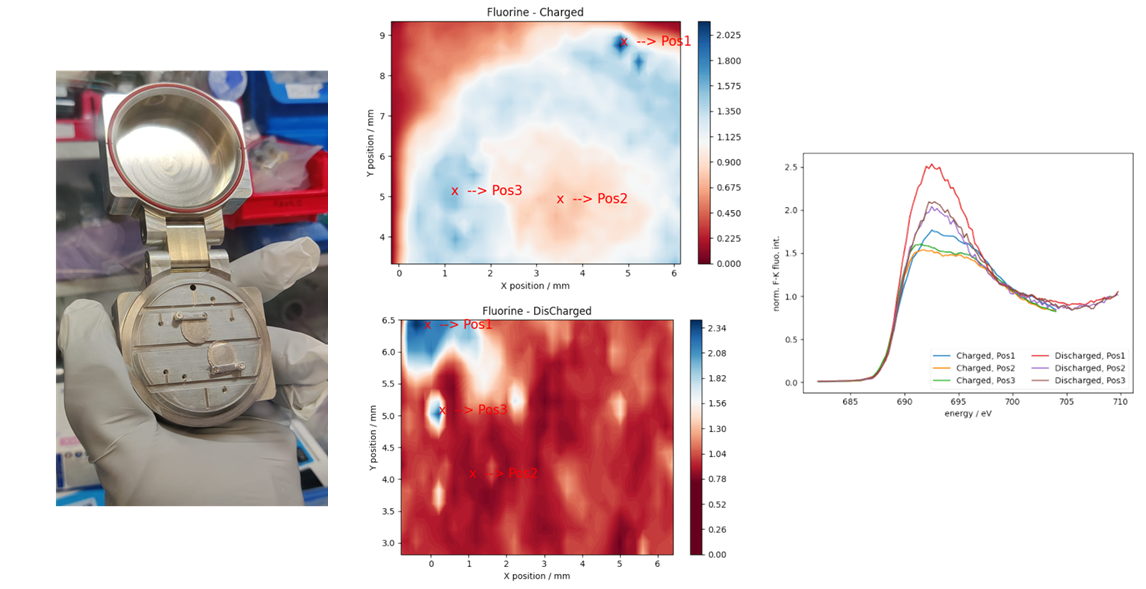
  • ex-situ characterization of cycled Li chips
  • XRF Mapping of light elements (C, N, O, F)
  • XAFS at F-K edge at selected positions

Both experiments would hardly be possible with protective windows to avoid air exposure.

Exemplary experimental application - Elemental mapping and spatially resolved XAFS analysis